Korea's First ENT Specialty Hospital — Ministry-Designated Excellence in Seoul
4.9 Patient Satisfaction
en-US


· Needs Clinic Confirmation
Laryngeal Cancer
Laryngeal cancer is a malignancy arising from the tissues of the larynx — commonly known as the voice box.
Schedule a ConsultationWhat Is Laryngeal Cancer? Understanding Cancer of the Voice Box
Laryngeal cancer is a malignancy arising from the tissues of the larynx — commonly known as the voice box — the structure in the throat responsible for voice production, airway protection during swallowing, and breathing. It is one of the most common head and neck cancers and, when identified at an early stage, is among the more treatable malignancies in oncology. The key to favorable outcomes is early detection — which depends on recognizing the warning symptoms and seeking specialist evaluation promptly rather than attributing persistent throat and voice symptoms to benign causes.
Laryngeal cancers are classified by location within the larynx. Glottic cancers — arising from the vocal cords themselves — are the most common type and frequently present early with hoarseness, as even small tumors on the vocal cord surface alter voice quality. Supraglottic cancers arise above the vocal cords and may present with throat discomfort, difficulty swallowing, or a neck lump before voice changes are noticed. Subglottic cancers are the least common and may present with breathing difficulty or stridor.
The primary risk factors for laryngeal cancer are tobacco smoking and heavy alcohol use — particularly in combination. A persistent hoarse voice lasting more than two to three weeks in a patient with relevant risk factors warrants urgent laryngoscopic evaluation to exclude malignancy.
Who Needs Laryngeal Cancer Assessment?
Early laryngoscopic assessment is essential whenever laryngeal cancer cannot be confidently excluded based on symptoms and risk profile. Seek specialist evaluation if you experience:
- Persistent hoarseness or voice change lasting more than two to three weeks without clear explanation
- A feeling of something stuck in the throat that does not resolve
- Difficulty or pain on swallowing — particularly when progressive
- Chronic throat pain or discomfort not linked to infection
- A lump in the neck that has appeared without explanation
- Noisy breathing or stridor — a high-pitched sound during breathing
- Unexplained ear pain on one side in the context of throat symptoms
- Unexplained weight loss accompanying throat or voice symptoms
- Patients with a history of significant tobacco use or heavy alcohol consumption experiencing any new or changing throat or voice symptoms
- Any patient who has been told they have vocal cord changes and has not had a recent specialist review
[Schedule Your Laryngeal Cancer Evaluation Today]
Meet the Laryngeal Cancer and Head & Neck Specialists at HANA ENT Hospital
 |
 |
 |
|---|---|---|
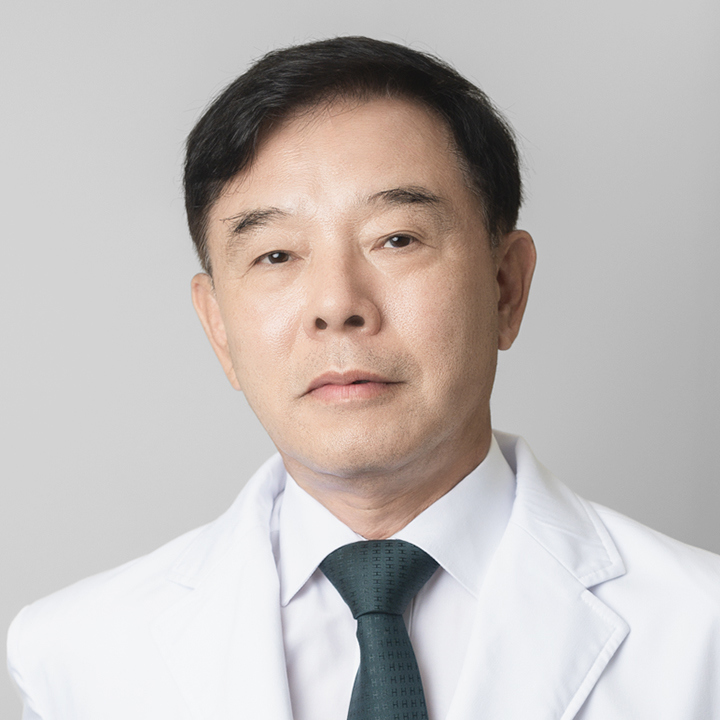
| Dr. Soon Yuhl Nam M.D., Ph.D. | Dr. Hyung Ro Chu Director | Dr. Kyu Sun Jang Senior Physician |
- Dr. Soon Yuhl Nam — Director, Head and Neck Center M.D. & Ph.D., Kyungpook National University · Researcher, Vanderbilt University School of Medicine, USA · Former Professor & Head, Dept. of Otorhinolaryngology, Ulsan University of Medicine · Former Director, Head and Neck Center, Seoul Asan Medical Center. Dr. Soon Yuhl Nam leads HANA ENT Hospital's Head and Neck Center with a career built at the highest levels of Korean academic head and neck oncology. His former role as Director of the Head and Neck Center at Seoul Asan Medical Center — one of Korea's largest and most respected cancer centers — combined with research training at Vanderbilt University School of Medicine in the United States, positions him as one of Korea's most experienced head and neck oncological surgeons. His clinical expertise encompasses laryngeal cancer, thyroid cancer, oral cancer, salivary gland tumors, and neck masses — the full spectrum of head and neck malignancy. For patients presenting with laryngeal cancer at HANA ENT Hospital, Dr. Nam brings Asan Medical Center-level oncological surgical expertise within a specialist ENT hospital environment.
- Dr. Hyung Ro Chu — Director, Throat & Voice / Sleep Center Research Instructor, Head and Neck Surgery, UCSD, USA · Professor, Hallym University College of Medicine · Lecturer, Korea University College of Medicine. UCSD-trained head and neck surgical expertise providing additional specialist depth in throat and laryngeal conditions alongside Dr. Nam.
- Dr. Kyu Sun Jang — ENT Specialist Intern & Resident, Samsung Seoul Hospital · Visiting Physician, University of Iowa, USA · Former Chief, Dept. of Otolaryngology, Joeun Geumgang Hospital. Broad ENT clinical experience supporting head and neck assessment and management.
The team's shared approach: precise staging through thorough laryngoscopic and imaging assessment; individualized treatment planning based on tumor location, stage, and patient needs; and clear communication with every patient throughout the diagnostic and treatment process.
Laryngeal Cancer Assessment and Treatment Areas
- Early-stage laryngeal cancer — organ preservation — Early glottic and supraglottic cancers identified at stage I or II offer the best opportunity for organ-preserving treatment — approaches that aim to eliminate the cancer while preserving laryngeal function and voice quality. Endoscopic laser surgery or radiation therapy may be appropriate for carefully selected early-stage tumors, avoiding the need for open laryngeal surgery. At HANA ENT Hospital, treatment recommendations for early laryngeal cancer are individualized based on tumor location, extent, and the patient's functional priorities — with organ preservation considered wherever oncologically appropriate. Individual treatment pathways and outcomes vary.
- Advanced laryngeal cancer — surgical management — More advanced laryngeal cancers — stage III and IV — require more extensive surgical intervention, which may include partial laryngectomy (preserving some laryngeal function) or total laryngectomy (complete removal of the larynx) depending on tumor extent and resectability. Neck dissection is performed where regional lymph node involvement is present or at risk. Surgical management of advanced laryngeal cancer at HANA ENT Hospital is led by Dr. Soon Yuhl Nam, whose extensive oncological surgical experience ensures that every case is assessed with the precision and depth that complex head and neck cancer surgery demands.
- Neck disease and lymph node involvement — Laryngeal cancer frequently spreads to regional lymph nodes in the neck — a finding that significantly affects staging and treatment planning. Clinical examination and CT/MRI imaging assess neck disease at presentation; neck dissection is performed where lymph node involvement requires surgical clearance. Comprehensive neck management is integral to the overall laryngeal cancer treatment plan at HANA ENT Hospital.
- Voice and swallowing rehabilitation — For patients undergoing partial or total laryngectomy, voice and swallowing rehabilitation is an essential component of post-surgical care. Total laryngectomy results in permanent loss of natural voice — with rehabilitation options including tracheoesophageal voice prosthesis, esophageal speech, or electrolarynx communication. The HANA ENT Hospital specialist team provides clear, realistic pre-operative counseling on post-surgical voice and swallowing expectations, and supports rehabilitation planning from the outset of treatment.
Laryngeal Cancer Diagnosis and Treatment Process
1. Urgent Laryngoscopic Assessment: Any patient with persistent hoarseness or throat symptoms warranting cancer exclusion is seen for urgent laryngoscopic examination. Direct visualization of the larynx and vocal cords identifies suspicious mucosal changes, masses, or abnormal vocal cord mobility. Clinical neck examination assesses lymph node status.
2. Imaging Staging: CT and/or MRI of the neck and chest provides detailed anatomical staging — characterizing tumor extent, depth of invasion, cartilage involvement, and regional lymph node status. PET imaging may be arranged where distant metastatic disease requires assessment.
3. Biopsy and Histological Confirmation: Tissue diagnosis is essential before any treatment decision. Biopsy of suspicious laryngeal lesions is performed under laryngoscopy — confirming malignancy, tumor type, and grade. Histological findings, combined with imaging staging, inform the complete treatment plan.
4. Multidisciplinary Treatment Planning: Laryngeal cancer management is inherently multidisciplinary. At HANA ENT Hospital, treatment planning integrates surgical, oncological, and rehabilitation considerations — with Dr. Soon Yuhl Nam leading the head and neck surgical assessment and coordinating with oncological colleagues where radiation or systemic treatment is part of the planned approach.
5. Surgery and/or Adjuvant Treatment: Surgical intervention — endoscopic, partial, or total laryngectomy with or without neck dissection — is performed based on tumor stage and individual assessment. Where indicated, adjuvant radiation or chemoradiation is coordinated as part of the overall treatment plan.
6. Post-Treatment Rehabilitation and Surveillance: Structured post-treatment follow-up monitors for recurrence and supports voice and swallowing rehabilitation. Surveillance imaging and laryngoscopy are scheduled at appropriate intervals. Long-term oncological follow-up is maintained within the same specialist system.
Laryngeal Cancer Treatment: Safety, Outcomes, and Realistic Expectations
Laryngeal cancer outcomes are strongly influenced by stage at diagnosis — reinforcing the critical importance of early specialist assessment for persistent throat and voice symptoms. Early-stage glottic laryngeal cancer is among the more favorable head and neck cancers in terms of treatment outcomes, with high rates of disease control achievable through appropriate treatment. Advanced laryngeal cancer requires more extensive treatment and carries a more guarded prognosis dependent on multiple clinical factors — discussed individually with every patient as part of a fully informed treatment planning process.
Head and neck cancer surgery at HANA ENT Hospital is performed within a dedicated specialist center with Ministry of Health and Welfare accreditation, led by a surgeon whose career at Seoul Asan Medical Center included extensive experience in laryngeal and head and neck oncological surgery. Every patient presenting with laryngeal cancer is given a clear, honest, and complete explanation of their diagnosis, treatment options, and realistic outcomes before any treatment decision is made.
Why Choose HANA ENT Hospital for Laryngeal Cancer Treatment?

HANA ENT Hospital is Korea's first and Seoul's only ENT specialist hospital officially designated by the Ministry of Health and Welfare — with independently verified, consecutively renewed standards in surgical care and patient safety since 1995. For laryngeal cancer specifically, the hospital's Head and Neck Center is led by Dr. Soon Yuhl Nam — former Director of the Head and Neck Center at Seoul Asan Medical Center and Vanderbilt-trained researcher — bringing the oncological surgical expertise of Korea's leading cancer centers to every laryngeal cancer case within a dedicated ENT specialist hospital environment.
The one-stop clinical system enables laryngoscopy, CT imaging, and initial treatment planning to be completed within a single coordinated visit — critical for patients whose symptoms warrant urgent assessment. With a dedicated Head and Neck Center, over 77,800 surgical patients, and a specialist team trained at Seoul National University Hospital, Samsung Seoul Hospital, and Asan Medical Center, HANA ENT Hospital delivers the institutional depth that complex head and neck cancer care demands.
Key reasons to choose HANA ENT Hospital for laryngeal cancer treatment:
- Former Director, Head and Neck Center, Seoul Asan Medical Center — Asan Medical Center-level laryngeal oncological surgical expertise within a dedicated ENT specialist hospital
- Seoul's only Ministry-designated ENT specialist hospital — accredited head and neck oncological care standards, renewed consecutively since 1995
- One-stop urgent assessment — laryngoscopy, CT imaging, and treatment planning within a single coordinated visit
- Full-spectrum laryngeal cancer management — from early organ-preserving approaches to advanced laryngectomy and post-surgical rehabilitation
Patient Experiences: Laryngeal Cancer Assessment at HANA ENT Hospital
Early Glottic Cancer Patient, 50s
A patient in their mid-50s — a long-term smoker — presented with persistent hoarseness of six weeks' duration. Urgent laryngoscopy at HANA ENT Hospital identified a suspicious lesion on one vocal cord. Biopsy confirmed early-stage glottic squamous cell carcinoma. An organ-preserving treatment approach was planned and initiated. The patient completed treatment and post-treatment surveillance confirmed disease control with preservation of functional voice quality.
Advanced Laryngeal Cancer Patient, 60s
A patient in their early 60s presented with progressive hoarseness, throat discomfort, and a neck lump over a three-month period. CT imaging and laryngoscopy confirmed advanced laryngeal cancer with regional lymph node involvement. Following thorough multidisciplinary treatment planning, surgical management was performed by Dr. Soon Yuhl Nam with concurrent neck dissection. Post-operative rehabilitation planning was initiated from the outset, with voice rehabilitation support provided throughout the recovery period.
Persistent Throat or Voice Symptoms Require Specialist Assessment — Don't Wait
A hoarse voice or persistent throat symptom that has lasted more than two to three weeks — particularly in the context of tobacco use or heavy alcohol consumption — warrants urgent specialist evaluation to exclude laryngeal cancer. Early assessment saves lives. At HANA ENT Hospital — The First ENT Specialty Hospital in Korea, The Only ENT Specialty Hospital in Seoul — Dr. Soon Yuhl Nam and the Head and Neck Center team provide urgent, expert laryngeal assessment and the full spectrum of head and neck oncological care.
Book your consultation today. Laryngoscopy, imaging, and treatment planning — all within a single coordinated visit.
[Book Your Laryngeal Cancer Consultation at HANA ENT Hospital]
For appointment scheduling and international patient inquiries, contact our patient services desk directly.
Other Services
Explore additional treatments offered by our specialists.

Voice Disorders
The human voice is produced by the precise vibration of the vocal cords — two small but remarkably complex structures housed within the larynx.
Learn More

Respiratory Conditions
Respiratory conditions encompass a broad range of diseases affecting the lungs, bronchi, and airways.
Learn More

Cognitive Decline & Early Dementia
Cognitive decline refers to measurable reduction in memory, attention, language, executive function, or visuospatial ability.
Learn More