Korea's First ENT Specialty Hospital — Ministry-Designated Excellence in Seoul
4.9 Patient Satisfaction
en-US


· Needs Clinic Confirmation
Functional Rhinoplasty
Functional rhinoplasty is a surgical procedure designed to correct structural abnormalities of the nose that impair nasal airflow and breathing function.
Schedule a ConsultationWhat Is Functional Rhinoplasty? Nasal Surgery That Prioritizes Breathing
Functional rhinoplasty is a surgical procedure designed to correct structural abnormalities of the nose that impair nasal airflow and breathing function. Unlike cosmetic rhinoplasty, which focuses primarily on the external appearance of the nose, functional rhinoplasty addresses the internal and structural causes of nasal obstruction — including a deviated nasal septum, collapsed nasal valves, enlarged turbinates, or post-traumatic nasal deformity — restoring normal, unobstructed breathing through the nasal passages.
The nose plays a critical role in respiratory health. It filters, warms, and humidifies the air we breathe before it reaches the lungs. When structural abnormalities narrow or collapse the nasal airway, patients are forced into chronic mouth breathing — a pattern that can disrupt sleep, reduce exercise tolerance, worsen sinus drainage, and affect overall quality of life. Functional rhinoplasty corrects these underlying structural problems at their source.
At HANA ENT Hospital, functional rhinoplasty is performed by ENT specialists with dedicated training in both nasal surgery and rhinology. Every patient undergoes a thorough pre-operative diagnostic workup — including nasal endoscopy and ENT-dedicated CT imaging — to precisely identify the anatomical contributors to their nasal obstruction before any surgical plan is finalized.
Who Needs Functional Rhinoplasty?
Functional rhinoplasty is indicated when structural nasal abnormalities are causing significant, persistent breathing difficulty that has not responded adequately to conservative management. You may be a candidate if you experience:
- Persistent nasal obstruction on one or both sides not relieved by medication
- Chronic mouth breathing, particularly during sleep or physical activity
- Noticeable collapse of one or both sides of the nose when inhaling
- Nasal breathing difficulty following facial trauma or a previous nasal injury
- Breathing problems that developed or worsened after a prior nasal surgical procedure
- Recurrent sinusitis or sinus drainage problems linked to structural nasal narrowing
- Patients in their 20s–60s who have been told their nasal obstruction has a structural rather than inflammatory cause
- Patients who have tried nasal sprays, decongestants, or allergy treatment without achieving satisfactory nasal airflow
[Schedule a Nasal Breathing Evaluation]
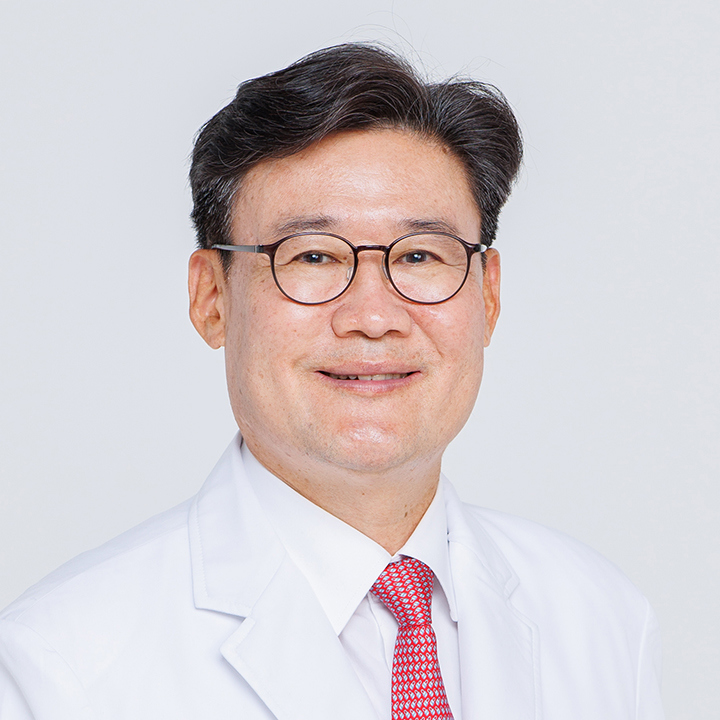
Meet the Functional Rhinoplasty Specialists at HANA ENT Hospital
 |
 |
 |
|---|---|---|
| Dr. Hun Jong Dhong M.D., Ph.D. | Dr. Sang Duck Lee M.D., Ph.D. | Dr. Do Kwang Jung Adjunct Professor |
 |
 |
 |
| Dr. Tae Hyun Kim Master's in Medicine, M.D. | Dr. Jong In Jeong Master of Medicine | Dr. Byung Kil Kim Bachelor's Degree, Master's Degree |
HANA ENT Hospital's nasal surgery team combines internationally trained ENT specialists with deep expertise in both the functional and structural aspects of nasal care.
- Dr. Hun Jong Dhong — Representative Director M.D. & Ph.D., Seoul National University · Fellow, University of Pennsylvania · Visiting Scholar, Cleveland Clinic · Former Chief & VP of Medical Affairs, Samsung Seoul Hospital · Professor & Head, Dept. of Otorhinolaryngology, Sungkyunkwan University · President, Korean Rhinological Society · President, Korean Society of Facial Plastic and Reconstructive Surgery · Chairman, International Congress of ORL-HNS. A leading Korean authority on nasal structural and functional surgery.
- Dr. Sang Duck Lee — Hospital Director M.D., Korea University · Ph.D., Dokkyo University, Japan · Rhinoplasty Training, University of Pennsylvania · Endoscopic Sinus Surgery Training, University of Graz, Austria · Adjunct Professor, Korea University · Former President, Korean Association of Specialty Hospitals. Specialized training in both rhinoplasty technique and endoscopic nasal surgery.
- Dr. Do Kwang Jung — Director Endoscopic Surgery Training, University of Graz · Adjunct Professor, Korea University & Chung-Ang University · Former Head of ENT, Korea University Ansan Hospital. Focus: structural nasal correction, sinusitis, deviated septum.
- Dr. Tae Hyun Kim — Vice Director M.D. & Master's, Kyung Hee University · Clinical Instructor, Kyung Hee University Hospital. Focus: endoscopic nasal surgery, nasal polyps, deviated septum correction.
- Dr. Jong In Jeong — Medical Director Master of Medicine, Sungkyunkwan University · Trained at Samsung Seoul Hospital & Keimyung University Dongsan Hospital · Former Assistant Professor, Keimyung University Dongsan Hospital. Specialist in functional rhinoplasty, endoscopic sinus surgery, and rhinitis.
- Dr. Byung Kil Kim — ENT Specialist B.Med. & M.Sc., Sungkyunkwan University · Clinical Instructor, Samsung Seoul Hospital · Former Clinical Professor, Chilgok Kyungpook National University Hospital. Focus: endoscopic nasal surgery, rhinitis, deviated septum.
The team's guiding philosophy: precise structural diagnosis first, surgery planned only when clearly indicated, and every procedure designed to optimize nasal function as the primary outcome.
Functional Rhinoplasty Treatment Areas and Expected Improvements
- Nasal septum — A deviated nasal septum is one of the most common structural contributors to nasal airway obstruction. Functional rhinoplasty frequently incorporates septoplasty to reposition deviated cartilage and bone, restoring a midline nasal septum and balanced airflow through both nasal passages. Improvement in nasal breathing is typically noticeable as post-operative swelling resolves over several weeks. Individual results vary.
- Nasal valves (internal and external) — The nasal valves are the narrowest points of the nasal airway and a frequent site of structural collapse causing breathing difficulty. Functional rhinoplasty can reinforce weakened or collapsed nasal valves using cartilage grafts or structural support techniques, improving airway patency during both quiet breathing and physical activity. Results depend on the degree of valve collapse and individual tissue characteristics.
- Nasal turbinates — Enlarged inferior turbinates frequently contribute to nasal obstruction alongside structural septal deviation. Where turbinate hypertrophy is identified during pre-operative assessment, concurrent turbinate reduction may be incorporated into the functional rhinoplasty plan to optimize overall nasal airflow. No outcome is guaranteed; results vary by individual.
- Post-traumatic or post-surgical nasal deformity — Patients with breathing difficulty following nasal trauma or prior nasal surgery may have structural irregularities in the nasal framework contributing to airway compromise. Functional rhinoplasty can address these structural irregularities while preserving or improving the external nasal appearance where relevant. Recovery and outcome depend on the complexity of the underlying deformity.
Functional Rhinoplasty Treatment Process and Timeline
1. Consultation & Diagnostic Workup: Nasal endoscopy and ENT-dedicated CT imaging are performed to map the internal nasal anatomy and identify all structural contributors to nasal obstruction. Findings are reviewed with the patient during the same visit and a tailored surgical plan is developed.
2. Pre-Operative Assessment: Surgical fitness is confirmed, anesthesia plan finalized, and any concurrent procedures — such as turbinate reduction or endoscopic sinus surgery — incorporated into the plan where indicated by diagnostic findings.
3. Functional Rhinoplasty Procedure: Performed under IV sedation combined with local anesthesia. Depending on the specific structural abnormalities identified, the procedure may include septoplasty, nasal valve repair, turbinate management, or cartilage grafting. Surgery is conducted with precision to prioritize nasal airway restoration as the primary goal.
4. Immediate Post-Operative Care: Patients are monitored following surgery and may have nasal packing or internal splints placed to support structural healing. Mild swelling, congestion, and discomfort are expected in the first week and are a normal part of recovery.
5. Follow-Up Visits: Regular post-operative appointments are scheduled to monitor healing, remove packing or splints, perform nasal irrigation, and assess functional outcome. The number of follow-up visits is determined by the complexity of the procedure.
6. Recovery: Most patients experience a recovery period of approximately 3–4 weeks for the resolution of primary swelling and return to normal daily activities. Nasal breathing improvement becomes more apparent as swelling subsides. Full structural stabilization may take several months.
Functional Rhinoplasty Results, Safety, and Longevity
Functional rhinoplasty addresses the structural root causes of nasal obstruction — delivering results that are intended to be long-lasting once healing is complete. Unlike medications that temporarily reduce mucosal swelling, surgical correction of a deviated septum, collapsed nasal valve, or structural nasal deformity provides a durable improvement in nasal airway patency. Individual outcomes vary depending on the complexity of the structural problem, the presence of co-existing conditions, and each patient's healing response.
At HANA ENT Hospital, every functional rhinoplasty procedure is performed by an ENT specialist with dedicated nasal surgery training, supported by a board-certified anesthesiologist present throughout the procedure. The hospital's surgical infrastructure operates within a dedicated ENT environment accredited by Korea's Ministry of Health and Welfare across multiple consecutive terms — providing an institutional standard of patient safety that few ENT facilities can match.
Patients should expect temporary nasal swelling, congestion, and mild discomfort in the first one to two weeks following surgery. Minor post-operative bleeding and a small risk of infection may occur. Serious complications are uncommon. In some cases, minor residual structural irregularity may remain, and revision surgery is occasionally required. All risks and realistic expectations are discussed thoroughly during the pre-operative consultation.
Why Choose HANA ENT Hospital for Functional Rhinoplasty?
HANA ENT Hospital is Korea's first and Seoul's only ENT specialist hospital officially designated by the Ministry of Health and Welfare — a distinction that reflects rigorously verified, consecutively renewed standards in specialist staffing, surgical infrastructure, and patient safety since 1995. The hospital's specialist team for functional nasal surgery includes physicians who trained in rhinoplasty at the University of Pennsylvania, completed endoscopic surgery training at the University of Graz in Austria, and held professorships and department chief positions at Korea's leading university hospitals.
The hospital ranked #1 nationally in endoscopic sinus surgery outcomes (National Health Insurance Service, 2006) and was the first in Korea to introduce coblation surgery (2005). With over 3.15 million outpatient visits and 77,800+ surgical patients, HANA ENT Hospital brings the clinical depth and surgical volume of a major academic ENT center to every patient consultation. Its one-stop diagnostic system means nasal endoscopy, CT imaging, specialist consultation, and surgical planning can all be completed within a single visit.
Key reasons to choose HANA ENT Hospital for functional rhinoplasty:
- Seoul's only Ministry-designated ENT specialist hospital — independently accredited surgical and patient safety standards, renewed consecutively since 1995
- Internationally trained nasal surgery team — rhinoplasty-trained at University of Pennsylvania; endoscopic surgery-trained at University of Graz, Austria
- One-stop diagnostic and surgical planning system — nasal endoscopy, CT imaging, and specialist consultation in a single visit
- #1 nationally in sinus surgery outcomes — institutional benchmark of nasal surgical excellence
Patient Experiences: Functional Rhinoplasty at HANA ENT Hospital
Nasal Obstruction Patient, 30s
A patient in their early 30s had struggled with persistent one-sided nasal blockage and chronic mouth breathing for several years. Previous trials of nasal sprays and allergy medication had provided no lasting relief. Pre-operative endoscopy and CT imaging identified a significant nasal valve weakness alongside a deviated septum. Following functional rhinoplasty incorporating septoplasty and nasal valve repair, the patient reported notably improved nasal airflow during both rest and exercise within the first month of recovery.
Post-Traumatic Nasal Breathing Patient, 40s
A patient in their mid-40s presented with progressive breathing difficulty following a nasal injury sustained several years earlier. Structural imaging confirmed post-traumatic deviation of the nasal septum with partial nasal framework irregularity. Functional rhinoplasty was performed to restore nasal airway patency, with the patient completing their follow-up course and reporting a meaningful improvement in breathing comfort and sleep quality.
Breathe Better — Book Your Functional Rhinoplasty Consultation
If structural nasal problems are making it difficult to breathe freely, exercise comfortably, or sleep well, functional rhinoplasty may offer the lasting correction you need. At HANA ENT Hospital — The First ENT Specialty Hospital in Korea, The Only ENT Specialty Hospital in Seoul — our internationally trained nasal surgery team will evaluate your nasal anatomy precisely and recommend the most appropriate treatment path for your individual condition.
Book your consultation today. Nasal endoscopy, CT imaging, and specialist evaluation — all within a single visit.
[Book Your Functional Rhinoplasty Consultation at HANA ENT Hospital]
For appointment scheduling and international patient inquiries, contact our patient services desk directly.
Other Services
Explore additional treatments offered by our specialists.

Voice Disorders
The human voice is produced by the precise vibration of the vocal cords — two small but remarkably complex structures housed within the larynx.
Learn More

Respiratory Conditions
Respiratory conditions encompass a broad range of diseases affecting the lungs, bronchi, and airways.
Learn More

Cognitive Decline & Early Dementia
Cognitive decline refers to measurable reduction in memory, attention, language, executive function, or visuospatial ability.
Learn More