Korea's First ENT Specialty Hospital — Ministry-Designated Excellence in Seoul
4.9 Patient Satisfaction
en-US


· Needs Clinic Confirmation
Cochlear Implants
A cochlear implant is a surgically implanted electronic device that restores the sensation of sound to individuals with severe to profound sensorineural hearing loss.
Schedule a ConsultationWhat Is a Cochlear Implant? Understanding When Implantation Is the Right Solution
A cochlear implant is a surgically implanted electronic device that restores the sensation of sound to individuals with severe to profound sensorineural hearing loss — where the cochlea is too damaged to transmit sound effectively and hearing aids no longer provide adequate benefit. Unlike a hearing aid, a cochlear implant bypasses the damaged cochlea entirely — delivering direct electrical stimulation to the auditory nerve via an electrode array implanted within the cochlea, enabling perception of speech, environmental sounds, and music.
Cochlear implantation is one of the most evidence-supported interventions in modern medicine — with decades of outcomes data demonstrating consistent, meaningful improvement in speech perception for appropriately selected candidates. It is suitable for both adults with progressive or sudden profound hearing loss and children with congenital or early-onset profound deafness — for whom early implantation is critical to support speech and language development.
At HANA ENT Hospital, cochlear implant assessment and surgery is led by physicians trained at Seoul National University Hospital Cochlear Implant Center and four international implant centers — bringing the highest level of specialist expertise to every candidacy evaluation and surgical procedure.
Who Is a Candidate for Cochlear Implantation?
Consider cochlear implant evaluation if:
- You have severe to profound bilateral sensorineural hearing loss confirmed by audiological testing
- Hearing aids have been trialed but do not provide adequate speech understanding
- Your hearing has deteriorated to the point where communication is significantly impaired despite optimal hearing aid use
- You have experienced sudden profound hearing loss in one or both ears
- Your child has been identified with congenital or early-onset profound hearing loss without adequate benefit from hearing aids
- You have had meningitis — cochlear ossification risk makes early implant timing critical
- CT or MRI has been recommended to assess cochlear anatomy for implant planning
- You are considering bilateral implantation having already received one cochlear implant
[Schedule Your Cochlear Implant Evaluation Today]
Meet the Cochlear Implant Specialists at HANA ENT Hospital
- Dr. Chang Sun O — Director, Ear Disease Center Ph.D., Seoul National University · Visiting Professor, Michigan State University & University of Lübeck, Germany · Former Chief, Dept. of Otolaryngology, Seoul National University Hospital · Former Director, Cochlear Implant Center, Seoul National University Hospital · President, Korean Audiological Society. Dr. Chang leads HANA ENT Hospital's cochlear implant program with a career at the pinnacle of Korean academic otology. His former directorship of the Cochlear Implant Center at Seoul National University Hospital — Korea's most prestigious academic institution — combined with visiting professorships at Michigan State University and the University of Lübeck, and the presidency of the Korean Audiological Society, positions him as one of Korea's most authoritative cochlear implant surgeons and hearing scientists.
- Dr. Jang JeongHun — Director & ENT Specialist M.D., Master's & Ph.D., Seoul National University · Training, Pittsburgh Medical Center · Cochlear Implant Training — Sydney (Australia), Innsbruck (Austria), Piacenza (Italy), Valencia (USA) · Former Professor of Otolaryngology, Ajou University. Dr. Jang holds all three medical degrees from Seoul National University and completed dedicated cochlear implant surgical training at four internationally recognized centers across four countries — among the most comprehensive international cochlear implant training profiles of any surgeon in Korean ENT practice. His clinical expertise covers cochlear implants, hearing loss, sudden hearing loss, tinnitus, Meniere's disease, and dizziness.
- Dr. Kim Jong Sei— ENT Specialist Kyungpook National University · Clinical Instructor, Samsung Seoul Hospital · Former Assistant Professor, Eulji University Hospital & Catholic Kwandong University. Focus: hearing loss, tinnitus, Meniere's disease, and hearing rehabilitation — supporting the cochlear implant team's comprehensive ear care.
Shared philosophy: thorough candidacy assessment before any surgical recommendation; implant surgery performed with precision; structured auditory rehabilitation from surgery through to long-term hearing outcomes.
Cochlear Implant Candidacy, Surgery, and Rehabilitation
- Adult cochlear implantation — Adults with severe-to-profound sensorineural hearing loss and inadequate hearing aid benefit are the primary adult implant population. Candidacy assessment confirms hearing thresholds and speech understanding scores meeting implant criteria, alongside CT/MRI confirming cochlear anatomy and auditory nerve integrity. Adults with shorter duration of profound deafness generally achieve better speech perception outcomes — though meaningful benefit is achievable across a wide range of candidate profiles. Post-operative auditory rehabilitation is essential for optimal outcomes and is supported by the HANA ENT Hospital specialist team throughout. Individual results vary.
- Pediatric cochlear implantation — For children with congenital or early-onset profound hearing loss, timing is critical — early implantation gives the greatest opportunity for speech and language development. Pediatric candidacy assessment uses age-appropriate audiological methods including ABR/BERA and behavioral audiometry. Post-implant auditory and speech rehabilitation is intensive and structured — supported throughout by the specialist team. Children implanted early frequently achieve communication abilities enabling mainstream education participation.
- Cochlear anatomy and surgical planning — High-resolution CT temporal bone imaging and MRI of internal auditory canals are essential pre-operative investigations — characterizing cochlear anatomy, identifying ossification or malformation affecting electrode insertion, and confirming auditory nerve integrity. Surgical planning is fully individualized based on imaging findings. Post-meningitis cochlear ossification cases are assessed urgently given the time-sensitive nature of implant timing.
- Device activation and auditory rehabilitation — Cochlear implant outcomes depend on both surgical precision and the post-operative rehabilitation process. Device activation typically occurs several weeks after surgery. Systematic auditory rehabilitation — training the brain to interpret electrical signals as meaningful speech — determines ultimate speech understanding. HANA ENT Hospital supports patients through activation, programming, and structured rehabilitation with regular audiological follow-up within the same specialist system.
Cochlear Implant Process and Timeline
1. Audiological Candidacy Assessment: Pure tone audiometry, speech audiometry in quiet and noise, and hearing aid benefit assessment — confirming severe-to-profound hearing loss and inadequate hearing aid benefit meeting implant criteria.
2. Medical and Imaging Assessment: CT temporal bone and MRI internal auditory canals — cochlear anatomy, ossification assessment, auditory nerve confirmation. Medical fitness for surgery confirmed.
3. Pre-Operative Counseling: Detailed discussion of expected outcomes, realistic speech perception trajectories, rehabilitation requirements, device options, and surgical risks. Fully informed decision before surgery is scheduled.
4. Cochlear Implant Surgery: Under general anesthesia — electrode array carefully inserted into the cochlea via a minimally invasive approach. Intraoperative monitoring confirms electrode function. Healing period follows before device activation.
5. Device Activation and Programming: Typically four to six weeks post-operatively — external processor activated and initial mapping performed by the audiological team.
6. Auditory Rehabilitation and Long-Term Follow-Up: Structured rehabilitation progressing from sound detection to speech understanding. Regular re-mapping, audiological monitoring, and rehabilitation support within the same specialist system long-term.
Cochlear Implant Outcomes, Safety, and Realistic Expectations
Cochlear implantation has one of the most robust evidence bases in surgical medicine — consistently demonstrating meaningful speech perception improvement for appropriately selected candidates. Most adult recipients achieve useful speech understanding in quiet environments following rehabilitation; outcomes in noise vary by individual. Children implanted early achieve the best language development outcomes — many attending mainstream education post-implantation.
Cochlear implant surgery carries a well-established safety profile. Procedure-specific risks — including small possibility of residual hearing loss in the implanted ear, infection, device failure, and rare facial nerve or balance effects — are discussed explicitly during pre-operative counseling. At HANA ENT Hospital, cochlear implant surgery is performed by Dr. Chang and Dr. Jang — whose combined surgical experience at Seoul National University Hospital Cochlear Implant Center and across four international training centers represents some of the most comprehensive cochlear implant expertise in Korean ENT practice.
Why Choose HANA ENT Hospital for Cochlear Implantation?
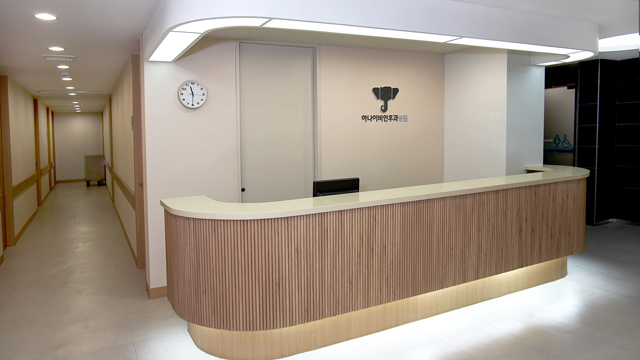
HANA ENT Hospital is Korea's first and Seoul's only ENT specialist hospital officially designated by the Ministry of Health and Welfare — independently verified standards renewed consecutively since 1995. The cochlear implant program is led by Dr. Chang Sun O — former Director of the Cochlear Implant Center at Seoul National University Hospital and President of the Korean Audiological Society — and Dr. Jang JeongHun, who completed cochlear implant training across four international centers. Together they represent the most credentialed cochlear implant surgical team available in Korean ENT specialist practice.
The hospital's dedicated Cochlear Implant Center provides fully integrated candidacy assessment, surgery, device activation, and long-term rehabilitation within the same specialist system — without referral gaps or handover between providers. With over 77,800 total surgical patients and a one-stop clinical system, HANA ENT Hospital delivers the depth and continuity of care cochlear implant patients require.
Key reasons to choose HANA ENT Hospital:
- Former Director, SNU Hospital Cochlear Implant Center & President, Korean Audiological Society — Korea's most credentialed cochlear implant surgical leadership
- International training — 4 cochlear implant centers across 4 countries — Sydney, Innsbruck, Piacenza, Valencia
- Dedicated Cochlear Implant Center — integrated assessment, surgery, activation, and rehabilitation within the same specialist system
- Seoul's only Ministry-designated ENT specialist hospital — accredited surgical standards, renewed consecutively since 1995
Patient Experiences: Cochlear Implant Surgery at HANA ENT Hospital
Adult Cochlear Implant Patient, 60s
A patient in their early 60s with progressive bilateral sensorineural hearing loss had reached the limit of hearing aid benefit — unable to follow conversation even in quiet. Audiological assessment confirmed severe-to-profound bilateral loss; CT confirmed normal cochlear anatomy. Cochlear implant surgery was performed by Dr. Jang JeongHun. Following activation and structured auditory rehabilitation, the patient reported meaningful improvement in speech understanding at follow-up assessments.
Pediatric Cochlear Implant Patient, Child aged 2
A child with bilateral profound congenital hearing loss identified at newborn hearing screening was referred after inadequate hearing aid benefit confirmed by ABR. CT and MRI confirmed normal cochlear anatomy and intact auditory nerves. Implant surgery was performed within the recommended age window. Post-operative rehabilitation was initiated promptly; follow-up assessments documented progressive speech and language development consistent with early implantation outcomes.
Hearing Aids No Longer Enough? Cochlear Implantation May Be the Answer
If severe hearing loss is significantly limiting your communication and hearing aids are no longer providing adequate benefit, cochlear implantation may offer the meaningful hearing restoration you need. At HANA ENT Hospital — The First ENT Specialty Hospital in Korea, The Only ENT Specialty Hospital in Seoul — our cochlear implant team provides expert assessment, precise surgical care, and full post-operative rehabilitation support.
Book your consultation today. Audiological assessment, imaging, candidacy evaluation, and surgical planning — all within a coordinated specialist system.
[Book Your Cochlear Implant Consultation at HANA ENT Hospital]
For appointment scheduling and international patient inquiries, contact our patient services desk directly.
Other Services
Explore additional treatments offered by our specialists.

Voice Disorders
The human voice is produced by the precise vibration of the vocal cords — two small but remarkably complex structures housed within the larynx.
Learn More

Respiratory Conditions
Respiratory conditions encompass a broad range of diseases affecting the lungs, bronchi, and airways.
Learn More
Cognitive Decline & Early Dementia
Cognitive decline refers to measurable reduction in memory, attention, language, executive function, or visuospatial ability.
Learn More